Adobe’s Subscription Shift
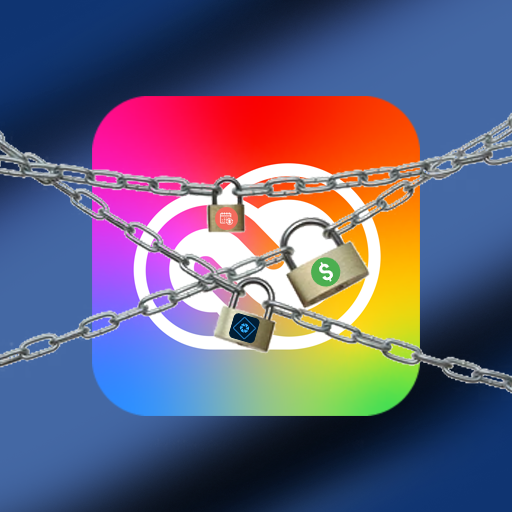
Adobe has long been one of the most influential companies in digital design. Programs like Adobe Photoshop, Adobe Illustrator, and Adobe After Effects have become industry standards, shaping the workflows of designers, video editors, and artists across the world. Throughout my own experience as a designer, I have relied heavily on these tools, not necessarily because I wanted to, but because the industry expects it. It is difficult to separate design as a discipline from Adobe as a company.
However, much like subtle design changes in games, Adobe’s shift in its business model has had a profound effect on how users interact with its products. The transition from one-time purchases to a subscription-based system was not immediate, but over time it has fundamentally changed the relationship between creator and tool. According to Adobe’s official announcements around the launch of Creative Cloud, the company emphasized benefits such as continuous updates and cloud integration. While these are real advantages, they also introduced a system where users no longer own the tools they rely on.
Before this shift, products like Adobe Photoshop Elements and Adobe Premiere Elements were sold as standalone purchases. You paid once, and the software was yours to use indefinitely. This model aligned closely with how creative tools had traditionally been distributed. You could upgrade if you wanted new features, but you were never locked out of your own work because of a missed payment. This is a key distinction that often gets overlooked when discussing Adobe’s evolution.
This is where my issues begin to arise. The subscription model, while convenient on the surface, introduces a dependency that can feel at odds with the creative process. If a designer stops paying for Adobe Creative Cloud, they lose access not only to updates, but to the software itself. In many cases, this also limits access to their own project files unless they maintain an active subscription. This creates a situation where the tools required to create are no longer fully in the control of the creator.
There is also a broader design philosophy issue at play here. In A Theory of Fun for Game Design by Raph Koster, the idea of pattern recognition is central to how users interact with systems. People expect consistency and fairness in how systems behave. For years, creative software followed a predictable model of ownership. Adobe’s shift breaks that pattern, replacing it with an ongoing obligation. This does not necessarily make the system unusable, but it does change how users perceive their relationship with the tools.
From a practical standpoint, this model disproportionately affects students and early-career designers. While Adobe does offer discounted plans, the long-term cost of maintaining a subscription can far exceed the price of older one-time purchases. Articles from sources like The Verge have discussed ongoing frustrations with subscription fatigue across the software industry, with Adobe often cited as a primary example. These articles have also highlighted the oncoming legal trouble that have come with shifting to this model. The concern is not just the price itself, but the accumulation of multiple subscriptions across different tools and services.
To better illustrate this point, consider the contrast with Adobe’s own Elements line. Products like Adobe Photoshop Elements still follow a one-time purchase model today. While they are more limited in features compared to their professional counterparts, they demonstrate that Adobe is still capable of offering ownership-based software. The existence of these products raises an important question: if this model works for some users, why is it not available for professionals who rely on these tools the most?
There are, of course, alternatives such as Affinity Photo, Affinity Designer, and DaVinci Resolve, many of which offer one-time purchase options or free versions. However, despite their strengths, they have not fully replaced Adobe in industry workflows. This reinforces the idea that Adobe’s dominance is not just about product quality, but about ecosystem lock-in and widespread adoption.
In The Art of Game Design: A Book of Lenses by Jesse Schell, there is discussion about how systems shape user experience and perception. Applying this idea here, Adobe’s subscription model does more than change pricing. It changes how designers think about access, ownership, and even longevity of their work. The tools no longer feel like something you possess, but something you temporarily borrow.
Perhaps this is just my perspective as someone who has had to rely on these tools throughout my design work. I understand the benefits that subscriptions can provide, especially in terms of updates and cross-platform integration. However, I find it difficult to ignore the trade-offs that come with that convenience. The shift away from ownership, especially when contrasted with products like Adobe Elements, feels less like an innovation and more like a restructuring of control.
There are many designers who accept or even prefer this model, and that is completely valid. Still, much like subtle design choices in games, these changes have a lasting impact on how users engage with a system. In this case, the system is not just software, but the entire creative workflow. For myself, I cannot help but feel that something was lost in the transition, even if the tools themselves have only become more powerful.