Designing Identity Through Constraint
Logo design is often misunderstood as purely creative work, but in reality, it begins with constraint. Before opening Adobe Illustrator, the most important step is understanding the client. Research shows that successful logo design starts with gathering detailed information about the client’s identity, audience, and goals through briefs and questionnaires. In the case of a microbiology lab, the challenge becomes immediately clear: the design must communicate science, credibility, and professionalism, while still being visually engaging.
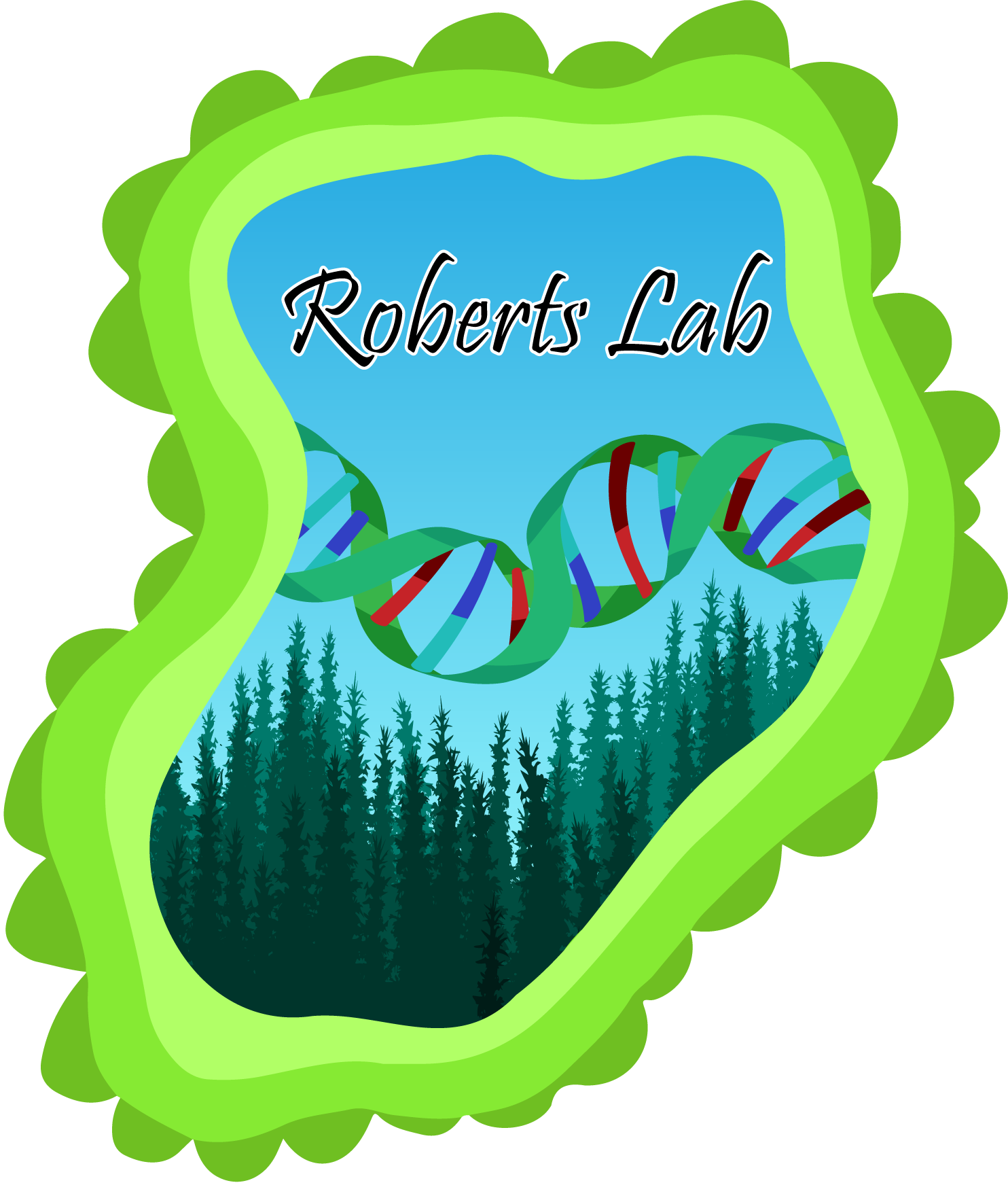
This is where the initial direction for the logo began. The inclusion of the DNA strand was not arbitrary, but directly tied to the core function of microbiology. Logos are meant to be “the most compressed version of a brand’s identity,” meaning every element must serve a purpose, this thinking taking from this blog on the topic. The DNA helix acts as an immediate visual shorthand for scientific research, allowing viewers to quickly understand the field without needing additional context.
However, simply representing the subject matter is not enough. One of the most important principles in logo design is originality balanced with relevance. A logo should stand out, but still feel appropriate within its industry, this thinking taking from this blog on the topic. This is where the organic, almost cellular border and forest imagery come into play. Rather than relying solely on clinical or sterile visuals often associated with labs, the design introduces natural elements. This creates a dual meaning: microbiology as both a scientific and environmental discipline.
The process of arriving at this final design was not immediate. Professional workflows emphasize ideation through sketching and iteration, often generating dozens of concepts before narrowing down to a few strong directions, this thinking taking from this blog on the topic. Early concepts explored more literal representations of lab equipment, such as microscopes and petri dishes. While these ideas were visually clear, they lacked uniqueness and felt too generic. Through iteration, the focus shifted toward something more symbolic and flexible.
Client feedback also played a significant role in shaping the outcome. Logo design is not a one-sided process, but a collaboration between designer and client, involving multiple rounds of refinement and approval. In this case, balancing scientific accuracy with visual appeal required careful adjustment. For example, the DNA strand needed to remain recognizable, but simplified enough to function at different sizes and contexts.
Typography presented another challenge. The script-style “Roberts Lab” text contrasts with the structured, scientific imagery. This decision was intentional, aiming to humanize the brand and make it feel more approachable. This aligns with the broader goal of logo design, which is not just to inform, but to shape perception and create a connection with the audience.
Perhaps the most important takeaway from this process is that good logo design is not about adding more elements, but about refining them. What appears to be a simple composition is the result of research, iteration, and constraint. As one breakdown of the design process explains, a logo is built through stages of discovery, sketching, refinement, and final delivery, each step narrowing the design toward something both functional and meaningful, this thinking taking from this blog on the topic.
This is more of a reflection than a definitive guide, but designing this logo reinforced an important idea. Creativity in design does not come from complete freedom, but from working within limitations. The needs of the client, the expectations of the industry, and the principles of design all act as boundaries. Rather than restricting the process, these boundaries help shape it into something purposeful.
In the end, the “Roberts Lab” logo is not just a visual mark. It is a solution to a problem: how to represent a complex scientific field in a way that is clear, unique, and meaningful.